
في الوقت الحاضر، تتميز العديد من طرازات السيارات بشعارات مثل ‘1.8T’ أو ‘2.0T’ في الخلف؛ يشير الحرف ‘T’ هنا إلى أن المركبة مزودة بمحرك مزود بشاحن توربيني.
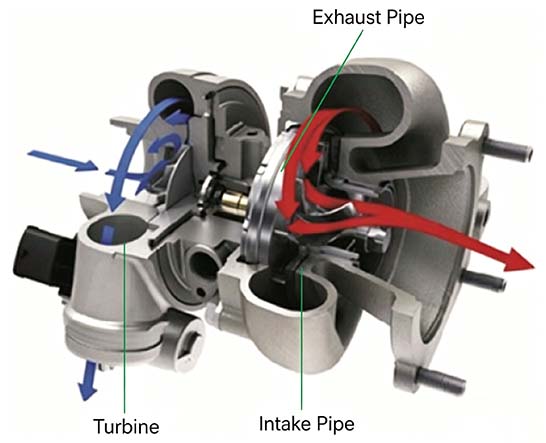
الشكل 1
يستخدم الشاحن التوربيني (الشكل 1) غازات العادم الصادرة من المحرك لتدوير التوربين (الموجود داخل مشعب العادم)؛ ويقوم التوربين بدوره بتشغيل المروحة المحورية الموجودة داخل مشعب السحب. تقوم المروحة بضغط الهواء النقي في مشعب السحب ثم تغذي الأسطوانات بالهواء المضغوط. كما يدعم النظام مكونات مثل "أنبوب زيت الشاحن التوربيني للعادم"، الذي يضمن تزييتًا مستقرًا وتشغيلًا فعالًا للشاحن التوربيني في ظروف درجات الحرارة العالية.
تتمثل الميزة الأكبر للمحرك المزود بشاحن توربيني في أنه يمكنه زيادة قدرة المحرك وعزم الدوران بشكل كبير دون زيادة سعته اللترية. يمكن زيادة قدرة المحرك بنحو 40 في المائة أو حتى أكثر.
ملاحظة: عند تشغيل محرك مزود بشاحن توربيني وهو في وضع الخمول بعد التشغيل، لا تضغط على دواسة الوقود بالكامل فورًا؛ يجب الانتظار حتى يتكون ضغط الزيت داخل الشاحن التوربيني قبل القيام بذلك.
خطوات إزالة الشاحن التوربيني
01 ارفع المركبة، أزل واقي المحرك السفلي وقم بتصريف سائل التبريد.
02 قم بفك مشابك الخرطوم في مجرى الهواء المشار إليه بالأسهم في الشكل 2، افصل مجرى الهواء وأبعده جانبًا.
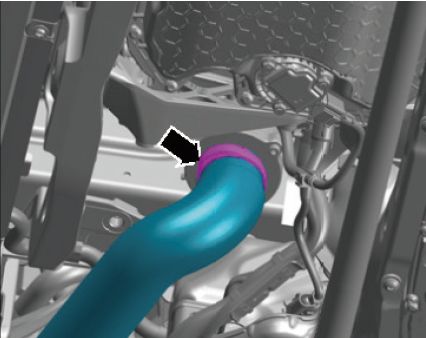
الشكل 2
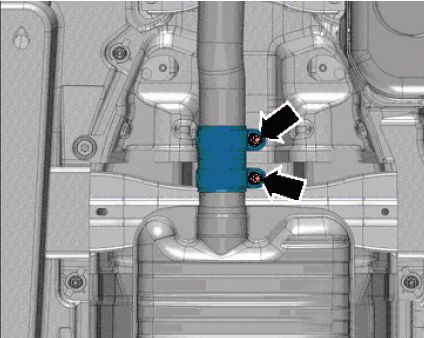
الشكل 3
04 كما هو موضح في الشكل 4، قم بفك الصامولة 2 من أسفل المركبة؛ لا تقم بفك الصامولة 1 في هذه المرحلة.
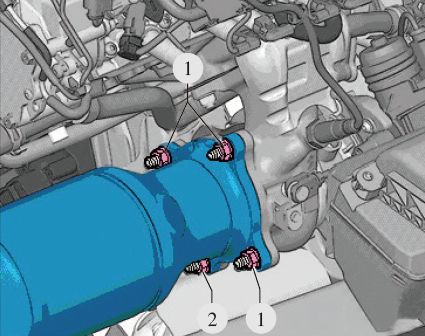
الشكل 4
05 كما هو موضح في الشكل 5، قم بفك مسمار التثبيت 1 في أنبوب رجوع الزيت وأرخِ مسمار تثبيت الحامل 2 بمقدار لفتين؛ لا تقم بإزالته.
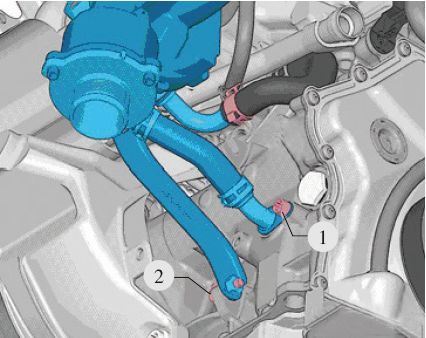
الشكل 5
ملاحظة: يجب تنفيذ الخطوات من ① إلى ⑤ بينما تكون المركبة على الرافعة.
06 أنزل المركبة، أزل غطاء المحرك، افصل كابل البطارية السالب، وقم بإزالة علبة فلتر الهواء.
07 كما هو موضح في الشكل 6، قم بإزالة حساس الأكسجين 2 من الحامل الخاص به وافصل موصله 1.
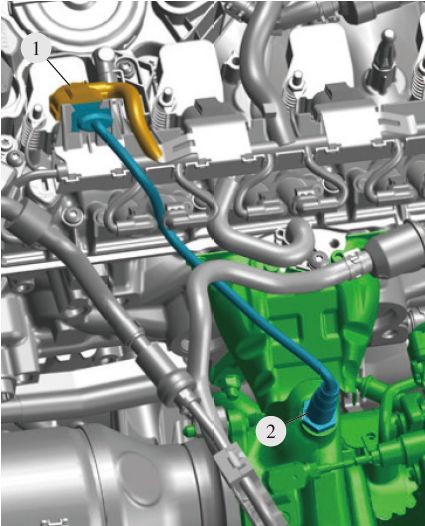
الشكل 6
08 قم بفك مسامير تثبيت أنبوب عادم علبة مرفق عمود المرفق من الشاحن التوربيني للعادم.
09 افصل موصلات منظم ضغط التعزيز وصمام تدوير هواء الشاحن التوربيني.10 في حجرة المحرك، قم بفك الصامولة 1 (الموضحة في الشكل 4) وادفع المحول الحفاز ثلاثي الاتجاهات إلى الخلف.
11 قم بإزالة مسامير تثبيت درع الحرارة للعادم عند حساس الأكسجين الأمامي وإزالة درع الحرارة.
12 كما هو موضح في الشكل 7، قم بفك وإزالة مسمار التثبيت 1 في أنبوب رجوع سائل التبريد؛ قم بفك المسمار 2 في أنبوب دخول الزيت وإزالة أنبوب دخول الزيت. أخيرًا، قم بفك وإزالة الصامولة المشار إليها بالسهم.
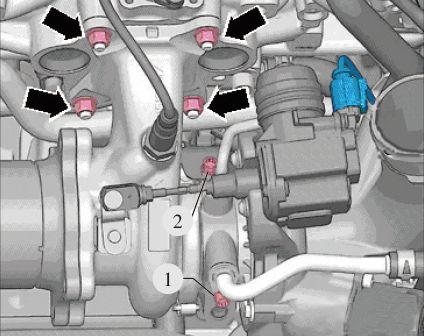
الشكل 7
13 قم بإرخاء مسمار التثبيت 1 في أنبوب دخول سائل التبريد الموضح في الشكل 8، ثم افصل أنبوب دخول سائل التبريد 2. اسحب الشاحن التوربيني بعيدًا عن مسمار التثبيت مزدوج النهاية في اتجاه السهم الموضح في الشكل، وارفع الشاحن التوربيني إلى الأعلى لإزالته.
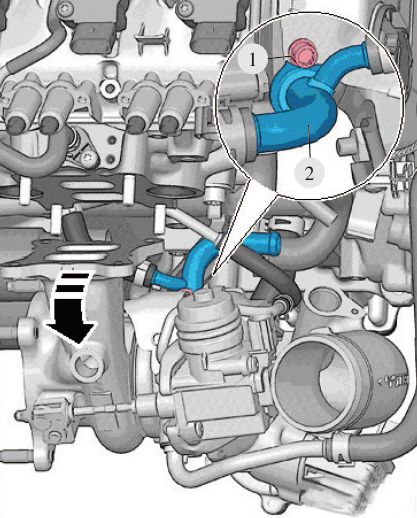
الشكل 8


 Whatsapp :
  هاتف :
  بريد الالكتروني :